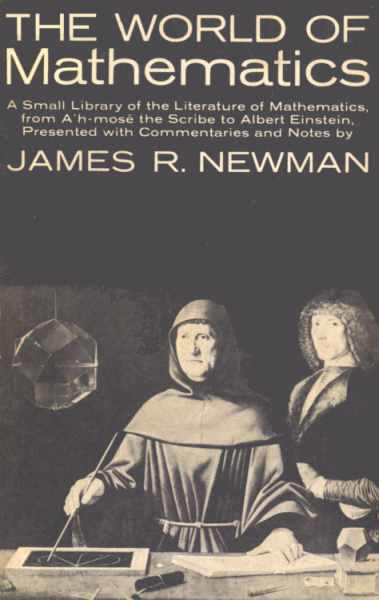
Először, 1956-ban jelent meg (Simon and Schuster, New York), majd az életrajzokban kiegészített és javított új kiadása 1988-ban került a boltokba (Microsoft Press, Redmond). Nem matematikus végzettségű szerkesztője előtt – akinek kalandos életét a új kiadás előszava ismerteti – le a kalappal. Most, a két és fél ezer oldalas mű előszavát (egyelőre angolul) és tartalomjegyzékét adom közre – utóbbit kétféle csoportosításban. Ha tudom, megadom az írás címének magyar megfelelőjét, továbbá, hogy magyar fordítása hol jelent meg – remélem, hogy nem tévedtem sokat. A közlés apropóját Bernard Shaw írása szolgáltatta. – A szerk.
Megcsapottak rovat
A matematika világa · The World of Mathematics
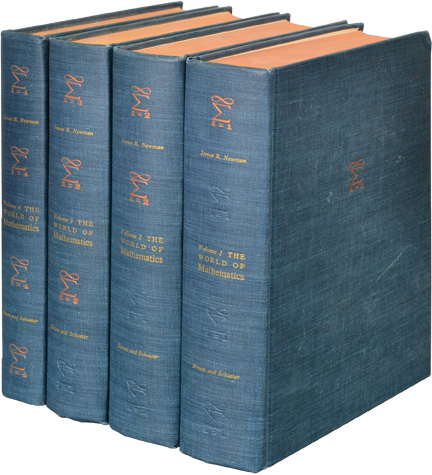
“An anthology is a work of prejudice,” wrote James Newman, the finest and deservedly the most popular of all anthologists in or around the sciences. His sharp little phrase begins to hint at why; a less vivid writer would have used the word taste instead of prejudice. Indeed, he went on, “I have felt at liberty to present the mathematics I like.”
You will like The World of Mathematics too. Newman wrote with unfailing wit, tinted with irony and never dulled by cliché. He made these 133 selections, chosen with great success to allow access by the nonspecialist, more accessible still by adding a brilliant page or two of introduction. Almost every time he steers you to the nub of the work in its context, whether the piece is a sober chapter of Greek philosophy or a tongue-in-cheek New Yorker story.
Newman’s own reading, learning, and grasp were genuinely comprehensive; for fifteen years he rummaged deep into books and journals old and new to winkle out a dazzling variety of sharply topical pieces. Some are undying classics we have all heard about but never read; others are less expected than next week’s headlines. He spread among these selections a delightful set of aphorisms at chapter heads. By themselves they make up a little book of mathematical citations, fortune-cookie slips from Parnassus.
Newman was quick to point out that he was not a mathematician. For a while he was a gifted aspirant, a graduate student in philosophy and mathematics at Columbia University, until he switched to the law school. In 1940 he coauthored, with one of his teachers, Edward Kasner, a fine popular book, Mathematics and the Imagination. (That volume added to the language the number-word googol, now as well known to elementary students as the words millions and billions. Two pieces from Mathematics and the Imagination are here, including the one that contains the first naming of ten-to-the-tenth.) By the time Mathematics and the Imagination was published, Newman had become a scientifically alert lawyer with a New York practice. World War II swept him into high responsibility; he was chief intelligence officer at the U.S. Office of Economic Warfare in wartime London and served in the Pentagon as special assistant to the Under Secretary of War.
At war’s end, Newman served as counsel to the Joint Congressional Committee on Atomic Energy and then as special counsel to President Truman. He took a leading part in drafting the legislation that established civilian control of atomic energy, and with a coauthor he published a standard book on the issue. Within a few years he became a full-time editor and writer, and by 1948 he was a senior member of the editorial board of the postwar Scientific American. There he established the unusual book review style in which a general reader, not a specialist, surveys new books in science for other general readers. At his sudden death in 1966, we took up the book reviews at Scientific American and continued the style he established. Those with long memories will also recall his wit in polemic against the enthusiasts for thermonuclear warfare during the 1960s, a battle against both overkill and shelters that in many minds he seems by now to have won.
What is there to enjoy in these pages? For starters, long excerpts from the most brilliant of modern expositions of mathematics and its applications. Hermann Weyl, the leading group theorist of his time, wrote a small book on symmetry, nearly a third of which is here, along with its wonderful illustrations from art and life. The digital world had been well entered into by the fifties, although computers were still without the chip. The two best-known essays from that period on computing are here. One, John von Neumann’s account of the ideas of A. M. Turing and of digital representation and automata, is still fresh. The other, Turing’s own often-cited test for the presence of machine thought by careful comparative questioning, is a marvelous piece. Or read Schrödinger on the aperiodic crystal as agent of heredity, a 1945 essay that directly inspired the unraveling of the double helix of DNA. The role of size fin nature is laid out fin the famous chapter “On Magnitude” by D’Arcy Thompson, from the nearly equal jumping ability of humans and fleas to bacterial life amidst the endless buffeting of Brownian movement.
Then there are the lives and anecdotes of discoverers great and small, from princely Archimedes to Dürer, Newton, Euler, Gauss, and Bertrand Russell. (These giants are also represented by important work of their own.) Augustus De Morgan tells the legend of how the formidable anticleric Diderot went to the Court at St. Petersburg, where he gave the younger people “a good deal of lively atheism,” as De Morgan put fit fin Victorian times. The Empress, unwilling to admonish their learned guest, enlisted old Euler, a straightforward believer, then in residence, to her cause. “He advanced towards Diderot and said gravely, and fin a tone of perfect conviction: ‘Monsieur, (a + bn) / n = x, donc Dieu existe; répondez!’ Diderot, to whom algebra was Hebrew, was embarrassed and disconcerted, while peals of laughter arose on all sides. He asked permission to return to France at once, which was granted.”
Mathematics is represented as well as mathematicians. A long piece on Gödel’s famous proposition about undecidability, specially written for the book by Newman with the philosopher Ernest Nagel, remains good hard reading. In contrast, Euclid’s proof that the primes never end takes a few lines, a masterpiece of simplicity. Fine accounts of probability are presented, from the philosophical subtleties of C. S. Peirce to the practical and experimental demonstrations by the English statistician L. C. Tippett. Jacob Bernoulli himself discusses the law of large numbers, although his proof is not included.
We need not go on; the books are once again at hand. Not everything is to be found here. Non-Euclidean space is treated a little drily by the English mathematician W. K. Clifford and the textbook author C. V. Durell; relativists such as Einstein and Born might have been better. But here are Malthus, Galton, Poincaré, and Tarski, a wide road through mathematics and its applications and meaning. Number is handled mainly according to Russell; nowadays other tunes would be heard as well.
A lot of this is funny. Newman has included, for example, two famous logically mad short stories from the 1940s. One tells of the wealthy skeptic who actually set some chimps to typing at random. Would they eventually write all the books of the British Museum? The distraught professor ends the all-too-successful experiment he witnesses with a smoking .38 revolver. “The sixth was Chimpanzee F…bleeding to death…painfully, with his left hand, he took from the machine the completed last page of Florio’s Montaigne. Groping for a fresh sheet, he…typed with one finger, UNCLE TOM’S CABIN.… Then he too was dead.”
It is some thirty years since the hot summer one of us spent delightedly reading these four new volumes—all eight gigabytes of text, plus pictures. An elementary school teacher of science and art, Phylis began with a sense of being a raw outsider to this thick slice of literature. But by summer’s end, amused and instructed by turns, she found herself forever connected to the mathematician’s culture, to the jokes and allusions of the trade as much as to the famous old proofs and the wise general insights. A couple of hundred thousand buyers of this multivolume blockbuster joined up soon as well, in a success unprecedented for books on mathematics. Now a new generation will add the set to its shelves.
With real gratitude, we offer this appreciation to the shelf of pleasure Newman lined up for us. We envy those who browse here for the first time—the second time, the nth time, using an index that turns the books into a reference library of lasting value.
Only one woman, the novelist Sylvia Townsend Warner, enters these pages as author; her contribution is a wry little satire on pedantry. Someday a more nearly complete anthology will be compiled, with twice the pool of first-rate work to draw upon. Let this reissue help speed the day.
Szerzők szerinti tartalom
Abbott, Edwin Abbott: Flatland (Síkföld).
Andrade, E. N. da C.: Isaac Newton (Isaac Newton)
Archimedes: The Sand Reckoner (Homokszámítás)
Ball, W. W. Rouse: Arithmetical Restorations
_ _ Calculating Prodigies (Csodák kiszámítása)
Bell, Eric Temple: Gauss, the Prince of Mathematicians (Gauss, a matematikusok fejedelme)
_ _ Invariant Twins, Cayley and Sylvester (Az invariáns ikrek: Cayley és Sylvester)
_ _ The Queen of Mathematics (A matematika királynője)
Berkeley, Bishop: The Analyst (Az Analizáló)
Bernoulli, Daniel: Kinetic Theory of Gases (A gázok kinetikus elmélete)
Bernoulli, Jacob: The Law of Large Numbers (A nagy számok törvénye)
Ball, W. W. Rouse: Arithmetical Restorations ()
Berwick, W. E. H.: The Seven Seven’s (A hét hetes)
Birkhoff, George David: A Mathematical Approach to Ethics (Az etika matematikája)
_ _ Mathematics of Aesthetics (Az esztétika matematikája)
Boole, George: Mathematical Analysis of Logic (A logika matematikai elemzése)
Boring, Edwin G.: Gustav Theodor Fechner
Boys, C. Vernon: The Soap-Bubble (A szappanbuborék)
Bragg, William: The Röntgen Rays (A Röntgen-sugarak)
Bromwich, Thomas John I’Anson: Easy Mathematics and Lawn Tennis (Könnyű matematika és a tenisz)
Brown, Lloyd A.: The Longitude (A földrajzi hosszúság)
Campbell, Norman Robert: Measurement (Mérés)
_ _ Numerical Laws and the Use of Mathematics in Science (A számolás törvényei és a matematika haszna a tudományokban)
Carroll, Lewis: What the Tortoise Said to Achilles and Other Riddles (Mit mondott a teknősbéka Akhillésznek és más találós kérdések)
Clifford, William Kingdon: On the Space Theory of Matter (Az anyag térelméletéről)
_ _ The Exactness of Mathematical Laws (A matematika törvényeinek egzaktsága)
_ _ Postulates of the Science of Space
Coates, Robert M.: The Law (A törvény)
Conant, Levi Leonard: Counting (Számlálás)
Corbellier, Le Philippe: Crystals and the Future of Physic (Kristályok és a fizika jövője)
Courant, Richard & Robbins, Herbert: Plateau’s Problem (Platón problémája)
_ _ & – – The Lever of Mahomet (Mohamed emeltyűje. = Mi a matematika? 321. p.)
_ _ & – – Topology (Topológia)
Cournot, Augustin: Mathematics of Value and Demand (Az érték és kereslet matematikája)
De Morgan, August: Assorted Paradoxes (Válogatott paradoxonok)
Dedekind, Richard: Irrational Numbers (Irracionális számok)
Descartes, René: The Geometry (Geometria)
Durell, Clement V.: The Theory of Relativity (A relativitás elmélete)
Eddington, Arthur Stanley: The Constants of Nature (Természeti állandók)
_ _ The New Law of Gravitation and the Old Law (A gravitáció régi és új törvénye)
_ _ The Theory of Groups (Csoportelmélet)
Euler, Leonhard: The Seven Bridges of Königsberg (Königsberg hét hídja)
Fisher, Ronald A.: Mathematics of a Lady Tasting Tea (A teaízlelés matematikája)
Galilei, Galileo: Mathematics of Motion (A mozgás matematikája)
Galton, Francis: Classification of Men According to Their Natural Gifts (Az emberek tehetség szerinti osztályozása)
Gasking, Douglas: Mathematics and the World (A matematika és a világ)
Graunt, John: Foundations of Vital Statistics (Az élet-statisztika alapjai)
Hahn, Hans: Infinity (Végtelen)
_ _ The Crisis in Intuition (Az intuició válsága)
Haldane, J. B. S.: Mathematics of Natural Selection (A természetes kiválasztódás matematikája)
_ _ On Being the Right Size
Halley, Edmund: First Life Insurance Tables (Első életbiztosítás táblák)
Hardy, G. H.: A Mathematician’s Apology (Egy matematikus mentegetődzései)
Heisenberg, Werner: The Uncertainty Principle (A határozatlansági elv)
Helmholtz, Hermann von: On the Origin and Significance of Geometrical Axioms (A geometria axiomáinak eredete és jelentősége)
Hempel, Carl G.: Geometry and Empirical Science (Geometria és tapasztalati tudomány)
_ _ On the Nature of Mathematical Truth (A matematikai igazság természete)
Hurwicz, Leonid: The Theory of Economic Behavior (A gazdaság viselkedésének elmélete)
Huxley, Aldous: Young Archimedes (A fiatal Arkhimédész)
Jaffe, Bernard: Mendeléeff (Dmitrij Ivanovics Mengyelejev)
Jeans, James: Mathematics of Music (A zene matematikája)
Jevons, William Stanley: Theory of Political Economy (A politikai gazdaságtan elmélete)
Jones, Harold Spencer: John Couch Adams and the Discovery of Neptune (John Couch Adams és a Neptun felfedezése)
Jourdain, Phillip E. B.: The Nature of Mathematics (A matematika természete)
Kaplan, Abraham: Sociology Learns the Language of Mathematics (A szociológia a matematika nyelvét tanulja)
Kasner, Edward & Newman, James R.: New Names for Old (Régi fogalmak új néven)
_ _ & – – Paradox Lost and Paradox Regained (Az elfeledett és újra felfedezett paradoxon)
_ _ & – – Pastimes of Past and Present Times (A múlt és jelen kedvtelései)
Keynes, John Maynard: Newton, the Man (Newton, az ember)
_ _ The Application of Probability to Conduct (A valószínűségszámítás alkalmazása a viselkedésre)
Keyser, Cassius J.: The Group Concept (A csoport fogalma)
Kline, Morris: Projective Geometry (Projektiv geometria)
Koehler, O.: The Ability of Birds to “Count” (A madarak „számolási” képessége)
Lanchester, Ferederick William: Mathematics in Warfare (Matematika a hadviselésben)
Laplace, Pierre Simon de: Concerning Probability (Ami a valószínűséget illeti…)
Leacock, Stephen: Common Sense and the Universe (Az Univerzum és a józan ész)
_ _ Mathematics for Golfers (Matematika golfjátékosoknak)
Lewis, Clarence Irving & Langford, Cooper Harold: History of Symbolic Logic (A szimbolikus logika története)
Lodge, Oliver: Johann Kepler (Johann Kepler)
Mach, Ernst: The Economy of Science (A tudomány gazdaságossága)
Maloney, Russell: Inflexible Logic (Makacs logika)
Malthus, Thomas Robert: Mathematics of Population and Food (A népesség és az élelmezés matematikája)
Mendel, Gregor: Mathematics of Heredity (Az öröklődés matematikája)
Menger, Karl: What Is Calculus of Variations and What Are Its Applications? (Mi a variációszámítás és mire alkalmazható?)
Mengyelejev, Dmitrij Ivanovics: Periodic Law of the Chemical Elements (A kémiai elemek periódusos rendszere)
Mises, Richard von: Mathematical Postulates and Human Understanding (Matematikai posztulátumok és az emberi értelem)
Moroney, M. J.: On the Average and Scatter (Az átlagról és a szórásról)
Morse, Phillip M. & Kimball, George E.: How to Hunt a Submarine (Hogyan vadászik egy tengeralattjáró?)
Moseley, H. G. J.: Atomic Numbers (Atomi számok)
Nagel, Ernest: Symbolic Notation, Haddocks’ Eyes and the Dog-walking Ordinance (Szimbolikus jelölés – A tőkehalak szemei és a kutyasétáltatási rendelet)
_ _ The Meaning of Probability (A valószínűség jelentése)
_ _ & Newman, James R.: Goedel’s Proof (Gödel bizonyítása)
Neumann, John von: The General and Logical Theory of Automata (Az automaták általános és logikai elmélete)
_ _ The Mathematician (A matematikus)
Newman, James R.: Srinivasa Ramanujan
_ _ The Rhind Papyrus (A Rhind matematikai papirusz)
Newton, Isaac: On the Binomial Theorem for Fractional and Negative Exponents (A binomiális tétel tört és negatív kitevővel)
Panofsky, Erwin: Dürer as a Mathematician (Dürer a matematikus)
Peirce, Charles Sanders: The Essence of Mathematics (A matematika lényege)
_ _ The Probability of Induction (Az indukció valószínűsége)
_ _ The Red and the Black (A vörös és a fekete)
Plutarch & Vitruvius & Tzetzes: Archimedes (Arkhimédész)
Poincaré, Jules Henri: Chance (Véletlen)
_ _ Mathematical Creation (A matematikai alkotás)
Polya, George: How to Solve It (A gondolkodás iskolája)
Recorde, Robert: The Declaration of the Profit of Arithmeticke
Richardson, Lewis Fry: Mathematics of War and Foreign Politics (A külpolitika és a háború matematikája)
_ _ Statistics of Deadly Quarrels (A halálos kimenetelű viták statisztikája)
Russell, Bertrand: Definition of Number (A szám definíciója)
_ _ Mathematics and the Methaphysicians (A matematika és a metafizikusok)
_ _ My Mental Development (Filozófiai fejlődésem)
Schrödinger, Erwin: Causality and Wave Mechanics (Okság és hullámmechanika)
_ _ Heredity and the Quantum Theory
Shannon, Claude: A Chess-playing Machine (Egy sakkautomata)
Shaw, George Bernard: The Vice of Gambling and the Virtue of Insurance (A szerencsejáték bűne és a kockázat erénye)
Smith, David Eugene & Ginsburg, Jekuthiel: From Numbers to Numerals and from Numerals to Computation (A számoktól a számolásig és a számolástól a számítástechnikáig)
Spengler, Oswald: Meaning of Numbers (A számok értelméről. = A nyugat alkonya; Existentia)
Sullivan, John William Navin: Mathematics as an Art (A matematika mint művészet)
Swift, Jonathan: Cycloid Pudding (Puding à la ciklois. = Gulliver utazásai)
Sylvester, James Joseph: The Study That Knowns Nothing of Observation
Tarski, Alfred: Symbolic Logic (Szimbolikus logika)
Thomas, Ivor: Greek Mathematics (Görög matematika)
Thompson, D’Arcy Wentworth: On Magnitude (A mágnességről)
Tippett, L. C.: Sampling and Standard Error (Mintavétel és szórás)
Turing, A. M.: Can a Machine Think? (Képes-e egy gép gondolkodásra?)
Turnbull, Herbert Westren: The Great Mathematicians (Nagy matematikusok)
Vajda, S.: Theory of Games (Játékelmélet)
Veblen, Oswald & Young, John Wesley: A Mathematical Science (Egy matematikai tudomány)
Warner, Sylvia Townsend: Geometry in the South Pacific (A Dél-Csendes-óceán geometriája)
Weyl, Hermann: Symmetry (Szimmetria)
_ _ The Mathematical Way of Thinking (A matematikai gondolkodásmód)
White, Leslie A.: An Antropological Footnote (Egy antropológiai lábjegyzet)
Whitehead, Alfred North: Mathematics as an Element in the History of Thought (A matematika, mint a gondolkodás történetének egy eleme)
Wilder, Raymond L.: The Axiomatic Method (Az axiomatikus módszer)
Cím szerinti tartalom
I. kötet
Általános (General Survey)
The Nature of Mathematics (A matematika természete) – Phillip E. B. Jourdain
Történet és életrajz (Historical and Biographical)
The Great Mathematicians (Nagy matematikusok) – Herbert Westren Turnbull
The Rhind Papyrus (A Rhind matematikai papirusz) – James R. Newman
Archimedes (Arkhimédész) – Plutarkhosz & Vitruvius & Tzetzes
Greek Mathematics (Görög matematika) – Ivor Thomas
The Declaration of the Profit of Arithmeticke – Robert Recorde
Johann Kepler – Oliver Lodge
The Geometry (Geometria) – René Descartes
Isaac Newton – E. N. da C. Andrade
Newton, the Man (Newton, az ember) – John Maynard Keynes
The Analyst (Az Analizáló) – Bishop Berkeley
Gauss, the Prince of Mathematicians (Gauss, a matematikusok fejedelme) – Eric Temple Bell
Invariant Twins, Cayley and Sylvester (Az invariáns ikrek: Cayley és Sylvester) – Eric Temple Bell
Srinivasa Ramanujan – James R. Newman
My Mental Development (Filozófiai fejlődésem) – Bertrand Russell
Mathematics as an Element in the History of Thought (A matematika, mint a gondolkodás történetének egy eleme) – Alfred North Whitehead
Aritmetika, számok és a számolás mestersége (Arithmetic, Numbers and the Art of Counting)
The Sand Reckoner (Homokszámítás) – Archimedes
Counting (Számlálás) – Levi Leonard Conant
From Numbers to Numerals and from Numerals to Computation (A számoktól a számolásig és a számolástól a számítástechnikáig) – David Eugene Smith & Jekuthiel Ginsburg
Calculating Prodigies (Csodák kiszámítása) – W. W. Rouse Ball
The Ability of Birds to “Count” (A madarak „számolási” képessége) – O. Koehler
The Queen of Mathematics (A matematika királynője) – Eric Temple Bell
On the Binomial Theorem for Fractional and Negative Exponents (A binomiális tétel tört és negatív kitevővel) – Isaac Newton
Irrational Numbers (Irracionális számok) – Richard Dedekind
Definition of Number (A szám definíciója) – Bertrand Russell
A tér és mozgás matematikája (Mathematics of Space and Motion)
The Exactness of Mathematical Laws (A matematika törvényeinek egzaktsága) – William Kingdon Clifford
Postulates of the Science of Space – William Kingdon Clifford
On the Space Theory of Matter (Az anyag térelméletéről) – William Kingdon Clifford
The Seven Bridges of Königsberg (Königsberg hét hídja) – Leonhard Euler
Topology (Topológia) – Richard Courant & Herbert Robbins
Dürer as a Mathematician (Dürer a matematikus) – Erwin Panofsky
Projective Geometry (Projektiv geometria) – Morris Kline
On the Origin and Significance of Geometrical Axioms (A geometria axiómáinak eredete és jelentősége) – Hermann von Helmholtz
Symmetry (Szimmetria) – Hermann Weyl
II. kötet
A fizikai világ matematikája (Mathematics and Physical World)
Mathematics of Motion (A mozgás matematikája) – Galileo Galilei
Kinetic Theory of Gases (A gázok kinetikus elmélete) – Daniel Bernoulli
The Longitude (A földrajzi hosszúság) – Lloyd A. Brown
John Couch Adams and the Discovery of Neptune (John Couch Adams és a Neptun felfedezése) – Harold Spencer Jones
Atomic Numbers (Atomi számok) – H. G. J. Moseley
The Röntgen Rays (A Röntgen-sugarak) – William Bragg
Crystals and the Future of Physic (Kristályok és a fizika jövője) – Le Philippe Corbellier
What Is Calculus of Variations and What Are Its Applications? (Mi a variációszámítás és mire alkalmazható?) – Karl Menger
The Soap-Bubble (A szappanbuborék) – C. Vernon Boys
Plateau’s Problem (Platón problémája) – Richard Courant & Herbert Robbins
Periodic Law of the Chemical Elements (A kémiai elemek periódusos rendszere) – Dmitrij Ivanovics Mengyelejev
Mendeléeff (Dmitrij Ivanovics Mengyelejev) – Bernard Jaffe
Mathematics of Heredity (Az öröklődés matematikája) – Gregor Mendel
On Being the Right Size – J. B. S. Haldane
Mathematics of Natural Selection (A természetes kiválasztódás matematikája) – J. B. S. Haldane
Heredity and the Quantum Theory – Erwin Schrödinger
On Magnitude (A mágnességről) – D’Arcy Wentworth Thompson
The Uncertainty Principle (A határozatlansági elv) – Werner Heisenberg
Causality and Wave Mechanics (Okság és hullámmechanika) – Erwin Schrödinger
The Constants of Nature (Természeti állandók) – Arthur Stanley Eddington
The New Law of Gravitation and the Old Law (A gravitáció régi és új törvénye) – Arthur Stanley Eddington
The Theory of Relativity (A relativitás elmélete) – Clement V. Durell
Matematika a társadalomtudományokban (Mathematics and Social Science)
Gustav Theodor Fechner – Edwin G. Boring
Classification of Men According to Their Natural Gifts (Az emberek adottságaik szerinti osztályozása) – Francis Galton
Mathematics of Population and Food (A népesség és az élelmezés matematikája) – Thomas Robert Malthus
Mathematics of Value and Demand (Az érték és kereslet matematikája) – Augustin Cournot
Theory of Political Economy (A politikai gazdaságtan elmélete) – William Stanley Jevons
Mathematics of War and Foreign Politics (A külpolitika és a háború matematikája) – Lewis Fry Richardson
Statistics of Deadly Quarrels (A halálos kimenetelű viták statisztikája) – Lewis Fry Richardson
The Theory of Economic Behavior (A gazdaság viselkedésének elmélete) – Leonid Hurwicz
Theory of Games (Játékelmélet) – S. Vajda
Sociology Learns the Language of Mathematics (A szociológia a matematika nyelvét tanulja) – Abraham Kaplan
A véletlen törvényszerűségei (The Laws of Chance)
Concerning Probability (Ami a valószínűséget illeti…) – Pierre Simon de Laplace
The Probability of Induction (Az indukció valószínűsége) – Charles Sanders Peirce
The Red and the Black (A vörös és a fekete) – Charles Sanders Peirce
The Application of Probability to Conduct (A valószínűségszámítás alkalmazása a viselkedésre) – John Maynard Keynes
Chance (Véletlen) – Jules Henri Poincaré
The Meaning of Probability (A valószínűség jelentése) – Ernest Nagel
III. kötet
Statisztika és kísérlettervezés (Statistics and the Design of Experiments)
Foundations of Vital Statistics (Az élet-statisztika alapjai) – John Graunt
First Life Insurance Tables (Első életbiztosítás táblák) – Edmund Halley
The Law of Large Numbers (A nagy számok törvénye) – Jacob Bernoulli
Sampling and Standard Error (Mintavétel és szórás) – L. C. Tippett
On the Average and Scatter (Az átlagról és a szórásról) – M. J. Moroney
Mathematics of a Lady Tasting Tea (A teaízlelés matematikája) – Ronald A. Fisher
The Vice of Gambling and the Virtue of Insurance (A szerencsejáték bűne és a kockázat erénye) – George Bernard Shaw
Az absztrakció művészetének felső foka: A csoportelmélet (The Supreme Art of Abstraction: Group Theory)
The Group Concept (A csoport fogalma) – Cassius J. Keyser
The Theory of Groups (Csoportelmélet) – Arthur Stanley Eddington
A végtelen matematikája (Mathematics of Infinity)
Mathematics and the Methaphysicians (A matematika és a metafizikusok) – Bertrand Russell
Infinity (Végtelen) – Hans Hahn
A matematikai igazság és a matematika felépítése (Mathematical Truth and Structure of Mathematics)
On the Nature of Mathematical Truth (A matematikai igazság természete) – Carl G. Hempel
Geometry and Empirical Science (Geometria és tapasztalati tudomány) – Carl G. Hempel
The Axiomatic Method (Az axiomatikus módszer) – Raymond L. Wilder
Goedel’s Proof (Gödel bizonyítása) – Ernest Nagel & James R. Newman
A Mathematical Science (Egy matematikai tudomány) – Oswald Veblen & John Wesley Young
Mathematics and the World (A matematika és a világ) – Douglas Gasking
Mathematical Postulates and Human Understanding (Matematikai posztulátumok és az emberi értelem) – Richard von Mises
A matematikai gondolkodás (The Mathematical Way of Thinking)
The Study That Knowns Nothing of Observation – James Joseph Sylvester
The Essence of Mathematics (A matematika lényege) – Charles Sanders Peirce
The Economy of Science (A tudomány gazdaságossága) – Ernst Mach
Measurement (Mérés) – Norman Robert Campbell
Numerical Laws and the Use of Mathematics in Science (A számolás törvényei és a matematika haszna a tudományokban) – Norman Robert Campbell
The Mathematical Way of Thinking (A matematikai gondolkodásmód) – Hermann Weyl
Matematikai logika (Mathematics and Logic)
Mathematical Analysis of Logic (A logika matematikai elemzése) – George Boole
History of Symbolic Logic (A szimbolikus logika története) – Clarence Irving Lewis & Cooper Harold Langford
Symbolic Notation, Haddocks’ Eyes and the Dog-walking Ordinance (Szimbolikus jelölés – A tőkehalak szemei és a kutyasétáltatási rendelet) – Ernest Nagel
Symbolic Logic (Szimbolikus logika) – Alfred Tarski
Matematikai ésszerűtlenségek (The Unreasonablenes of Mathematics)
Paradox Lost and Paradox Regained (Az elfeledett és újra felfedezett paradoxon) – Edward Kasner & James R. Newman
The Crisis in Intuition (Az intuició válsága) – Hans Hahn
Hogyan oldjuk meg? (How to Solve It)
How to Solve It (A gondolkodás iskolája) – George Polya
A matematika szókincse (The Vocabulary of Mathematics)
New Names for Old (Régi fogalmak új néven) – Edward Kasner & James R. Newman
A matematika mint művészet (Mathematics as an Art)
Mathematics as an Art (A matematika mint művészet) – John William Navin Sullivan
IV. kötet
A matematikus (The Mathematician)
A Mathematician’s Apology (Egy matematikus mentsége) – G. H. Hardy
Mathematical Creation (A matematikai alkotás) – Jules Henri Poincaré
The Mathematician (A matematikus) – Neumann János
Matematikai gépek: Képes-e egy gép gondolkodásra? (Mathematical Machines: Can a Machine Think?)
The General and Logical Theory of Automata (Az automaták általános és logikai elmélete) – Neumann János
Can a Machine Think? (Képes egy gép gondolkodásra?) – Alan M. Turing
A Chess-playing Machine (Egy sakkautomata) – Claude Shannon
Matematika a hadviselésben (Mathematics in Warfare)
Mathematics in Warfare (Matematika a hadviselésben) – Ferederick William Lanchester
How to Hunt a Submarine (Hogyan vadászik egy tengeralattjáró?) – Phillip M. Morse & George E. Kimball
Matematikai művészetelmélet (Mathematical Theory of Art)
Mathematics of Aesthetics (Az esztétika matematikája) – George David Birkhoff
A jó matematikája (Mathematics of the Good)
A Mathematical Approach to Ethics (Az etika matematikája) – George David Birkhoff
Matematika az irodalomban (Mathematics in Literature)
Cycloid Pudding (Puding à la ciklois. = Gulliver utazásai) – Jonathan Swift
Young Archimedes (A fiatal Arkhimédész) – Aldous Huxley
Geometry in the South Pacific (A Dél-Csendes-óceán geometriája) – Sylvia Townsend Warner
Inflexible Logic (Makacs logika) – Russell Maloney
The Law (A törvény) – Robert M. Coates
Matematika a zenében (Mathematics in Music)
Mathematics of Music (A zene matematikája) – James Jeans
A matematika, mint kulturális kulcs (Mathematics as a Culture Clue)
Meaning of Numbers (A számok értelméről. = A nyugat alkonya; Existentia) – Oswald Spengler
An Antropological Footnote (Egy antropológiai lábjegyzet) – Leslie A. White
Szórakozás, rejtvény, fantázia (Amusements, Puzzles, Fancies)
Assorted Paradoxes (Válogatott paradoxonok) – August De Morgan
Flatland (Síkföld) – Edwin Abbott Abbott
What the Tortoise Said to Achilles and Other Riddles (Mit mondott a teknősbéka Akhillésznek és más találós kérdések) – Lewis Carroll
The Lever of Mahomet (Mohamed emeltyűje. = Mi a matematika? 321. p.) – Richard Courant & Herbert Robbins
Pastimes of Past and Present Times (A múlt és jelen kedvtelései) – Edward Kasner & James R. Newman
Arithmetical Restorations – W. W. Rouse Ball
The Seven Seven’s (A hét hetes) – W. E. H. Berwick
Easy Mathematics and Lawn Tennis (Könnyű matematika és a tenisz) – Thomas John I’Anson Bromwich
Mathematics for Golfers (Matematika golfjátékosoknak) – Stephen Leacock
Common Sense and the Universe (Az Univerzum és a józan ész) – Stephen Leacock
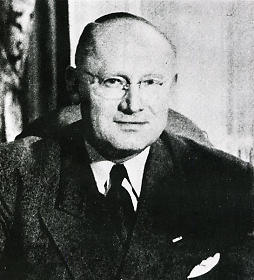
(1907–1966)
forrás
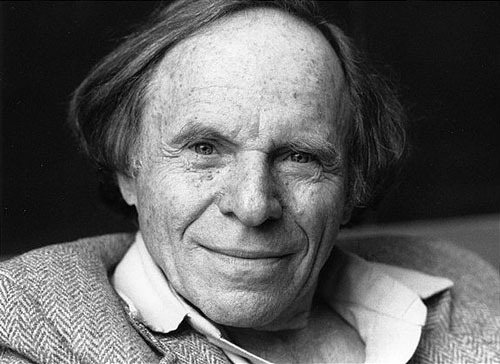
(1915–1989)
© exploratorium.edu
Cover artwork © Richard Kehl, 1988
Cover artwork © Richard Kehl, 1988

Cover artwork © Richard Kehl, 1988

Cover artwork © Richard Kehl, 1988